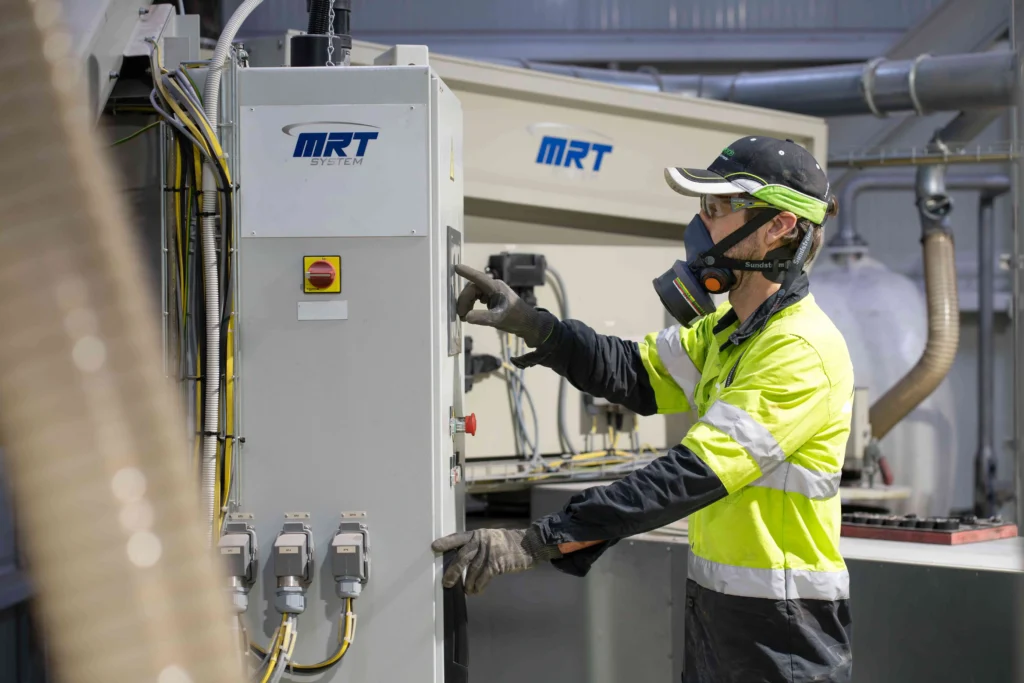
LP600 Lighting Waste Processing Plant

Our Lighting Waste Processing Plants are one of EcoCycle’s key technologies for safely recycling used lighting products, including fluorescent tubes, HID, and compact fluorescent bulbs. Operating under negative pressure and fitted with advanced filtration systems, the plant ensures that mercury vapour and particulate matter are safely contained throughout the recycling process.

HOW IT WORKS

The Lighting Waste Processing Plant

Lighting waste is fed into the plant through an enclosed system that mechanically separates each component under vacuum.

The process involves:

1

Controlled Crushing and Separation

Lights are crushed in a sealed chamber to prevent mercury release.

1

2

Material Recovery

Glass, metal, and phosphor powder are separated for individual treatment and recycling.

2

3

Mercury Capture and Filtration

Mercury vapour is extracted through multi-stage filters and activated carbon systems to ensure safe containment.

3

The recovered materials are then transferred for further processing — metals are recycled, glass is cleaned for reuse, and phosphor powder containing trace mercury is directed to EcoCycle’s mercury recovery systems for treatment.

Performance and Environmental Benefits

The plant is capable of processing up to 600 fluorescent tubes per hour, achieving recovery rates of up to 95% of lamp materials. By operating under sealed, negative-pressure conditions, the system eliminates the risk of mercury exposure, ensuring worker safety and environmental protection.

All outputs are managed within EcoCycle’s EPA-licensed facilities, maintaining full compliance and traceability from collection to final recovery.

Onshore Processing Advantage

By processing lighting waste locally within Australia, EcoCycle eliminates the need for offshore processing or export. This approach reduces transport emissions, supports local industry, and ensures all recovered materials are handled under Australian environmental standards.

These plants are part of EcoCycle’s commitment to building a national, onshore recycling network that protects people, the environment, and the circular economy.